
Myth Check · August 9, 2026 · 4 min · By Isolde Nakata
Liquid Rhinoplasty in Beverly Hills: What Filler Can and Cannot Do to a Nose
Nonsurgical nose jobs are marketed as a quick, low-risk swap for surgery. The vascular anatomy of the nose tells a more complicated story.
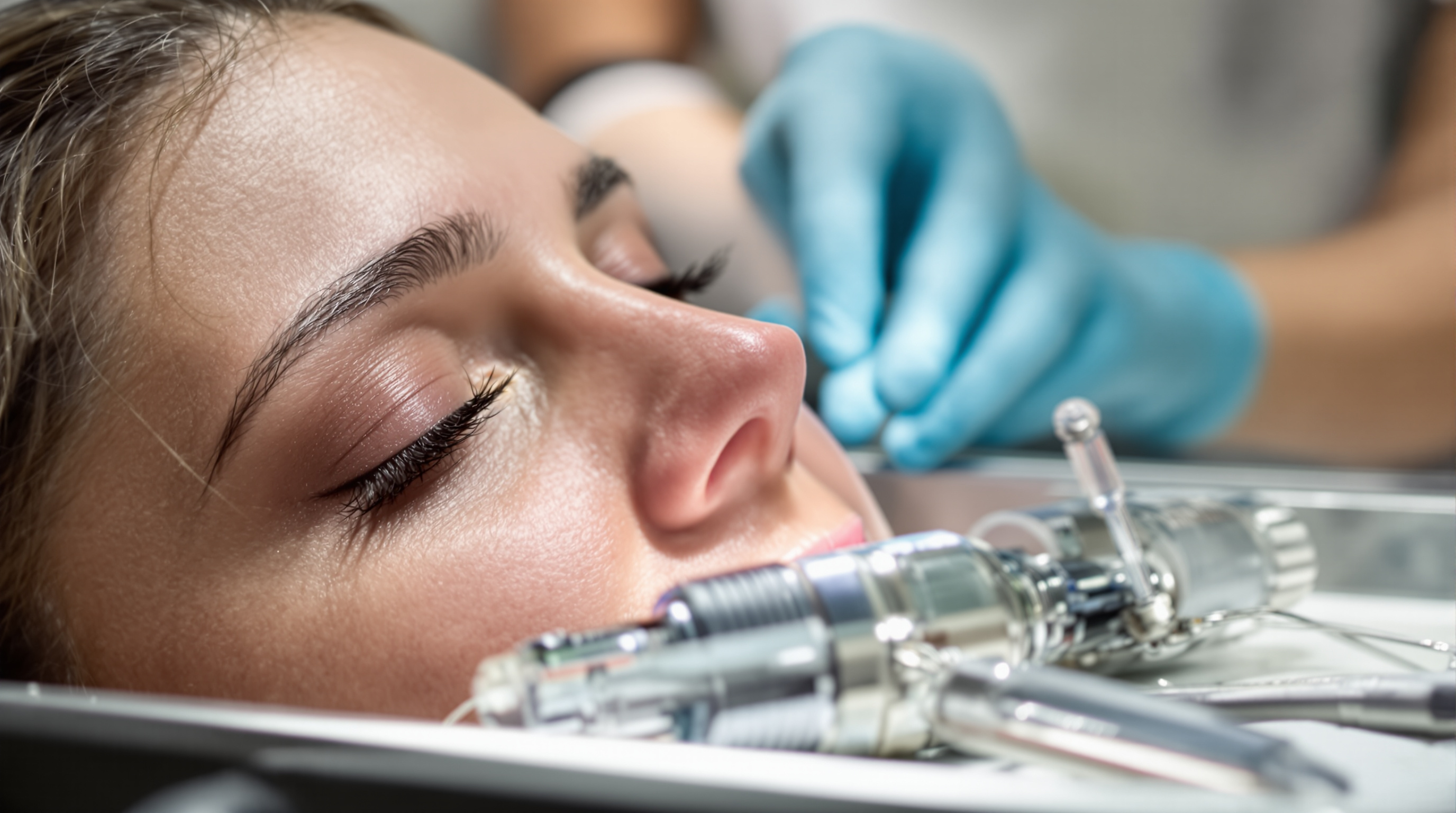
Walk down any commercial stretch of Beverly Hills and you will find the phrase somewhere: liquid rhinoplasty, fifteen minutes, no downtime. The procedure, which uses injectable hyaluronic acid filler to reshape the nose, has become one of the most requested nonsurgical treatments in the area. The claim that usually rides along with it, that it is a safe and reversible alternative to surgical rhinoplasty, deserves a closer look. Parts of that claim are true. Parts of it are not, and the parts that are not involve some of the highest-stakes anatomy in aesthetic medicine.
What the procedure actually does. Liquid rhinoplasty adds volume. That is the entire mechanism. An injector places small amounts of hyaluronic acid gel, typically a firm, high-cohesivity product, along the dorsum, the radix, or the tip. Filling above and below a dorsal hump can create the optical illusion of a straighter profile. Filling the radix, the depression between the eyes, can make a nose look less projected. A drop of product at the tip can create the appearance of slight rotation. For a patient with a modest hump, a low radix, or minor asymmetry after prior surgery, the visual result can be genuinely convincing, and it is reversible with hyaluronidase, an enzyme that dissolves hyaluronic acid.
What it cannot do. Filler cannot remove tissue. A nose that is objectively large will be slightly larger after filler, even if it photographs straighter. Filler cannot narrow wide nasal bones, reduce a bulbous tip built on thick cartilage and skin, shrink flared nostrils, or open an obstructed airway. Patients with breathing complaints, significant humps, or major structural issues are surgical candidates, full stop, and reputable injectors in Beverly Hills say so out loud. When a consultation for filler turns into a referral for septorhinoplasty, that is the system working correctly.
The risk profile is not trivial. This is where the marketing language tends to fail patients. The nose is supplied by branches of the facial artery, including the lateral nasal and angular arteries, which anastomose with the dorsal nasal artery, a branch of the ophthalmic artery. The ophthalmic artery also supplies the retina. If filler is injected into one of these vessels under enough pressure, the product can travel in retrograde fashion and embolize downstream. The two feared outcomes are skin necrosis, when the blood supply to nasal skin is blocked and tissue dies, and visual loss, when embolized filler reaches the retinal circulation. Published reviews of filler-related blindness consistently identify the nose and glabella as the highest-risk injection zones on the face. Blindness from filler is rare in absolute terms, but when it occurs it is usually immediate and usually permanent, because retinal tissue tolerates only minutes of ischemia.
Revision patients face higher risk, not lower. A counterintuitive point: patients who have already had surgical rhinoplasty are among the most common candidates for filler touch-ups, and they are also at elevated vascular risk. Prior surgery scars down tissue planes and can distort or tether vessels, making the safe deep midline plane less predictable. Experienced injectors approach post-rhinoplasty noses with smaller volumes, slower injection, and lower pressure precisely because the normal anatomic roadmap no longer applies.
What competent technique looks like. Injectors who take this procedure seriously tend to follow a recognizable pattern. They inject in the deep midline plane, on the periosteum or perichondrium, where named vessels are least likely to sit. They use small aliquots, often 0.05 milliliters or less per pass, with low plunger pressure. They keep hyaluronidase physically in the room, not in a cabinet down the hall, because vascular occlusion is treated in minutes, not hours. Many avoid the tip and alar region in patients with prior surgery. Some use cannulas, some use needles, and the literature does not show either tool eliminates risk. What matters more is depth, volume, and the injector's ability to recognize blanching, disproportionate pain, or a livedo pattern immediately.
Cost math worth doing. Liquid rhinoplasty in the Beverly Hills market commonly runs several hundred to a few thousand dollars per session, and results last roughly 9 to 18 months depending on product and placement. Repeated over a decade, that recurring cost can approach or exceed the price of a single surgical rhinoplasty, which is permanent. For patients testing a change before committing to surgery, the temporary nature is a feature. For patients seeking a lifetime fix, it is a treadmill.
The honest bottom line. Liquid rhinoplasty is a legitimate tool with a narrow, well-defined lane: small contour irregularities, low radix correction, minor post-surgical asymmetries. It is not a low-stakes procedure, and it is not a substitute for surgery in patients with structural or functional problems. The right question to ask any injector is not how natural the result will look. It is where they inject, how much, how deep, and what sits on the tray if something goes wrong.
More in Myth Check
View all →- Liquid Rhinoplasty in Beverly Hills: What Filler Can Fix, What It Cannot, and Where the Real Risk Lives
- Weight Loss Drugs and the Face: What Rapid GLP-1 Slimming Means for Facelift Timing in Beverly Hills
- The time budget: how long your combined procedure plan actually takes
- Clot risk before cosmetic surgery: how to score yourself before the consultation