
Choosing a Surgeon · April 24, 2026 · 6 min · By Goldie Strandberg
How to read a surgeon's before-and-after photos
Galleries are powerful evidence, if you know what to look for and what to be wary of.
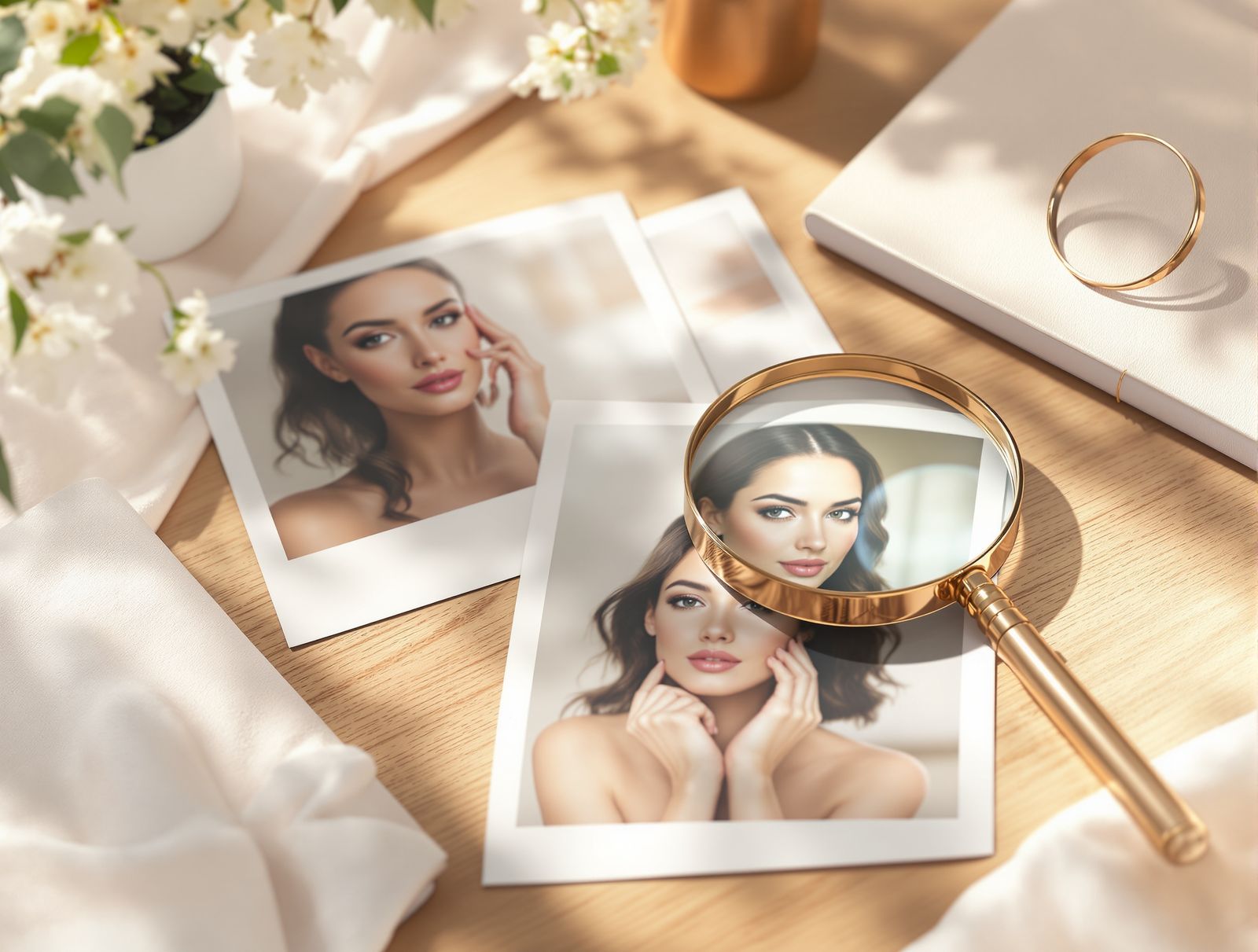
A surgeon's before-and-after gallery is one of the most useful tools a prospective patient has for evaluating skill, but only if you know how to read it. Photos can mislead as easily as they inform, so a critical eye is essential.
Look for patients similar to you. The most useful images are of patients who resemble you in the relevant ways: similar age, anatomy, skin type, and starting point, having the same procedure you are considering. A beautiful result on someone with very different features tells you less about what the surgeon can achieve for you. Ask specifically to see cases like yours, the kind of targeted evaluation we encourage in how to choose a board-certified plastic surgeon.
Favor natural results over dramatic ones. A skilled, tasteful surgeon's gallery shows results that look natural and harmonious, a refreshed or improved version of the person, rather than obviously operated-on or identical, cookie-cutter outcomes. As the American Society of Plastic Surgeons emphasizes, natural-looking results that suit the individual are the mark of good work, the same principle we stress in setting realistic expectations in cosmetic surgery.
Check that the photos are honest comparisons. Be alert to inconsistencies that can flatter a result unfairly: different lighting, angles, distance, posture, or makeup between the before and after, or before photos taken in deliberately unflattering conditions. A trustworthy gallery uses consistent, standardized photography, same lighting, angle, and pose, so the comparison reflects the surgery, not the photography.
Look at the scars and the details. Good before-and-after photos let you assess how well incisions were placed and how the scars healed, part of the scar reality of any procedure. Look at the details: symmetry, smoothness of contour, and whether the result looks balanced with the rest of the body or face. These details often distinguish a competent result from an excellent one.
Confirm the photos are the surgeon's own work. Ask whether the gallery shows the surgeon's own patients, not stock images or another surgeon's results, and whether the photos are unedited. Reputable surgeons are happy to confirm this and often have far more cases to show than appear on a website. Seeing a range, including results on patients like you, is more revealing than a handful of highlight images.
Use photos as one input, not the whole decision. A strong gallery is meaningful evidence, but it works alongside, not instead of, verifying board certification, confirming the facility is accredited, and assessing the surgeon's honesty in consultation. Photos show what a surgeon can do; the rest tells you whether they will do it safely and honestly for you.
The takeaway. Before-and-after photos are powerful evidence when read critically: seek out patients like you, favor natural results, watch for inconsistent or misleading photography, scrutinize scars and details, and confirm the images are the surgeon's own unedited work. Used this way, a gallery becomes a genuine window into a surgeon's skill rather than a marketing gloss.
Related reading: Board certification, what it really means and how to choose a board-certified plastic surgeon.